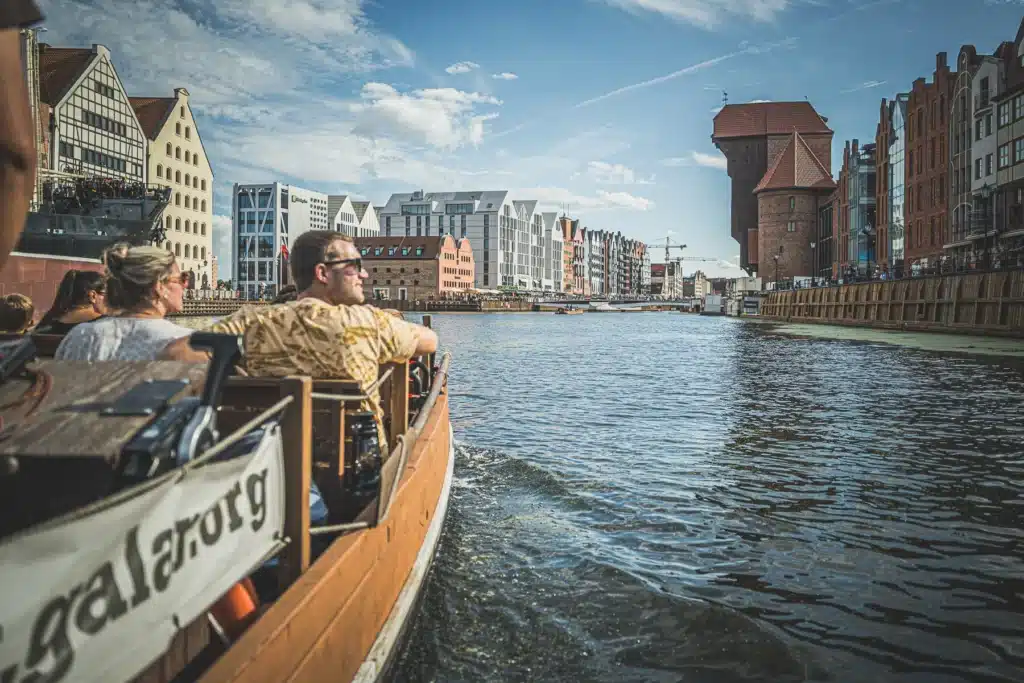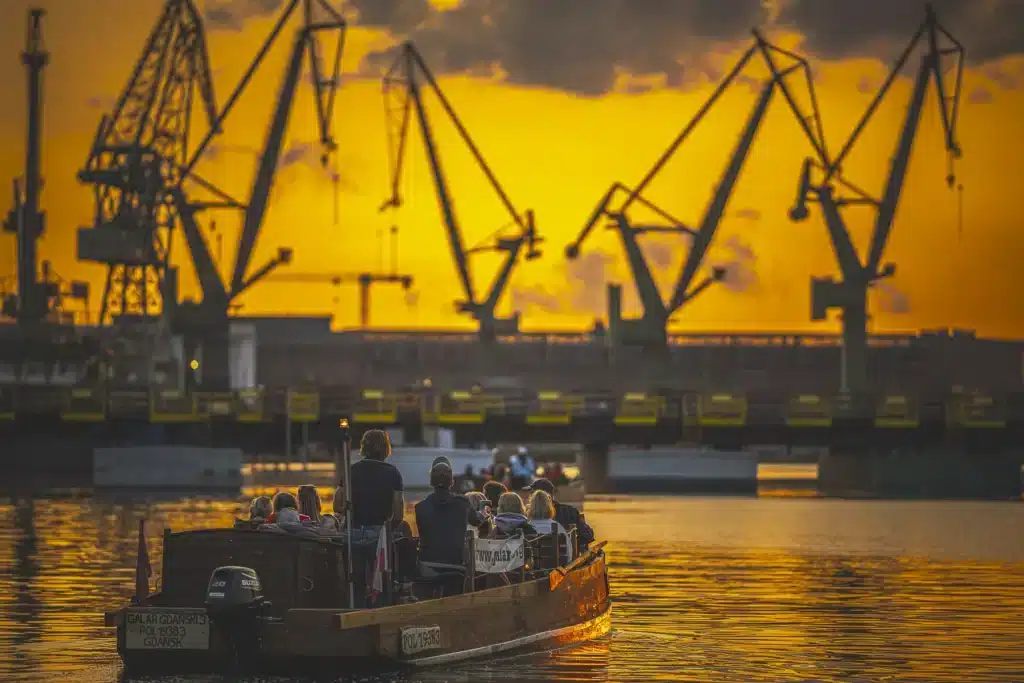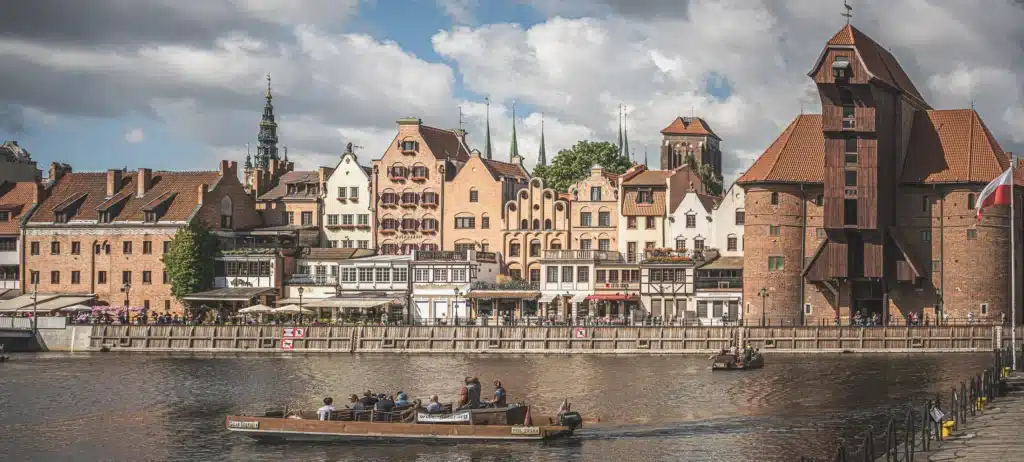



Granaries, a brick power station, traces of former port infrastructure — Ołowianka brings together several different chapters of Gdańsk’s history within a small area. It is surrounded by water on the Motława River and the Stępka Canal. Like the neighbouring Granary Island, however, it was not always an island.
Before the island was formed
Ołowianka was separated from the mainland by the Stępka Canal, dug in 1576. The area had already been used for economic purposes prior to this: carpentry and boat-building workshops operated here, vessels were repaired, and goods were stored. The oldest granaries were built at the beginning of the 15th century.
The island’s name is linked to the lead that was stored here prior to onward transport. The raw material arrived by waterway from, amongst other places, the Olkusz area. The place’s current name thus preserves the memory of a specific commodity and the Gdańsk port’s far-reaching connections.
Royal grain on the Motława
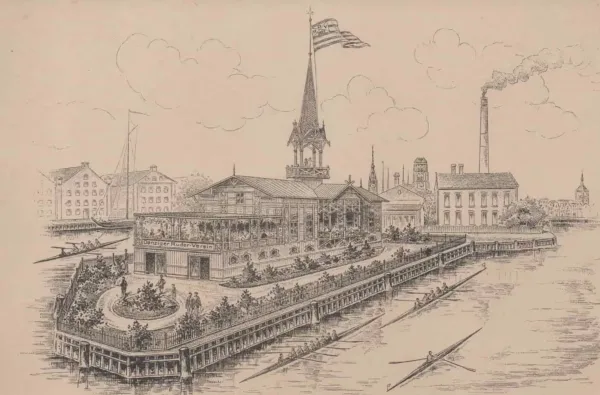
In 1454, Kazimierz Jagiellończyk granted this land to the city, obliging it to provide a granary for the royal grain. This is yet another indication of Gdańsk’s importance in the trade and transport of agricultural produce. Warehouses were needed by the water’s edge, from which goods could be easily transhipped.
The Royal Granary as we know it today dates, in its basic form, from the early 17th century. The date of the royal decree should therefore not be equated with the age of the present building. As in other parts of the port, the buildings were replaced, rebuilt and adapted to meet changing needs.
An island of industry and municipal facilities
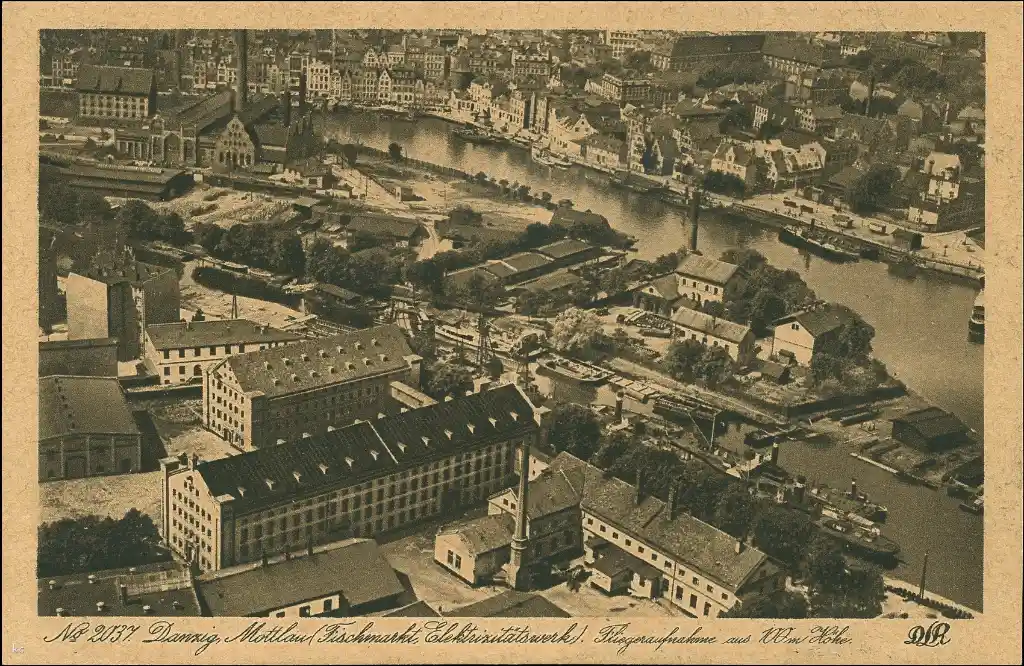
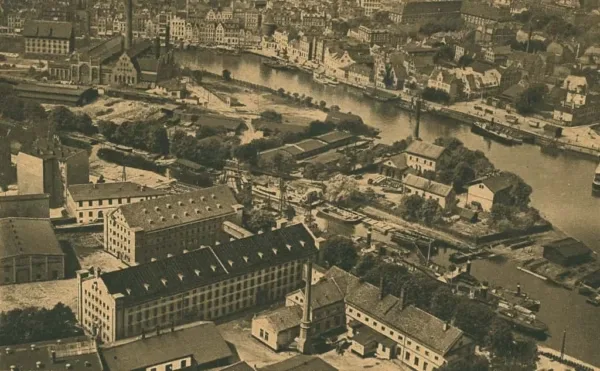
In the 19th century, Ołowianka began to fulfil an increasing number of functions. Alongside the warehouses, facilities serving the modern city began to appear. A sewage pumping station was built, whose buildings and distinctive chimney form part of the island’s industrial heritage.
At the same time, the water was also used for leisure and sport. Rowing clubs found a home here. The harbour environment thus combined work, the development of urban infrastructure and recreation — functions that can be seen side by side in the archival views.
From power station to concert halls
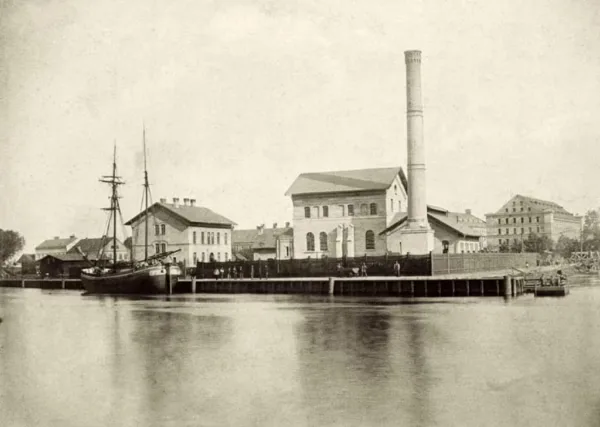
Towards the end of the 19th century, a municipal power station was built on the island. The Polish Baltic Philharmonic cites the years 1897–1898 as the period of the building’s construction. The brick buildings became an important part of the Ołowianka skyline and a symbol of the next stage in Gdańsk’s development.
After the Second World War, the plant was converted into a combined heat and power station. The end of industrial operations paved the way for a new use of the buildings. The former complex was converted into the headquarters of the Polish Baltic Philharmonic and a music and conference centre.
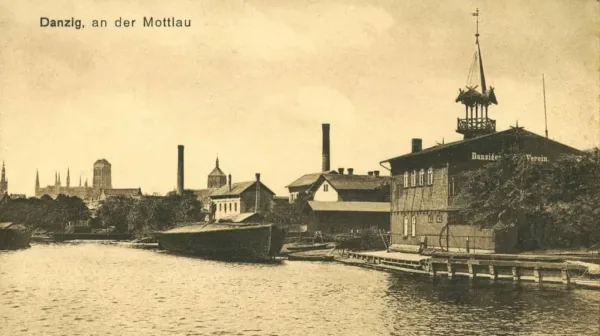
Looking at Ołowianka from the Motława, one can see this change of purpose without severing its ties to its port past. The granaries are a reminder of trade, the power station of technological progress, and the island’s current cultural activities are writing the next chapter. The island has retained its connection with the river, though it has long stored far more than just goods.